Endometriosis affects approximately 190 million women globally, but there is no simple path for diagnosing and treating this condition. The disease often presents with symptoms of chronic pelvic pain and heavy menstrual bleeding, but could also present as extreme pain in any part of the body, including lungs, eyes and other unexpected locations.
Currently, the definitive diagnosis of endometriosis requires laparoscopic surgery, a costly and invasive procedure. The accuracy of this method heavily depends on the surgeon's expertise, and even the best experts may miss small or atypical lesions. Non-invasive imaging techniques like ultrasounds and MRIs have limitations in detecting certain forms of the disease, particularly superficial or non-ovarian lesions. This diagnostic complexity is a key contributor to the average time to diagnosis of seven to ten years.
The scarcity of specialists proficient in recognizing and treating women with endometriosis exacerbates these challenges, often leading to prolonged patient suffering and diminished quality of life. And the normalization of menstrual pain and an overall lack of awareness about the condition among healthcare providers delays timely diagnosis and intervention.
Addressing these issues will require solutions that span the continuum of care, including the development of reliable non-invasive screening and diagnostic tools, enhanced training for healthcare professionals, not just gynecologists, and increased public awareness to ensure early recognition and screening for endometriosis.
Trends in Endometriosis Research & Innovation
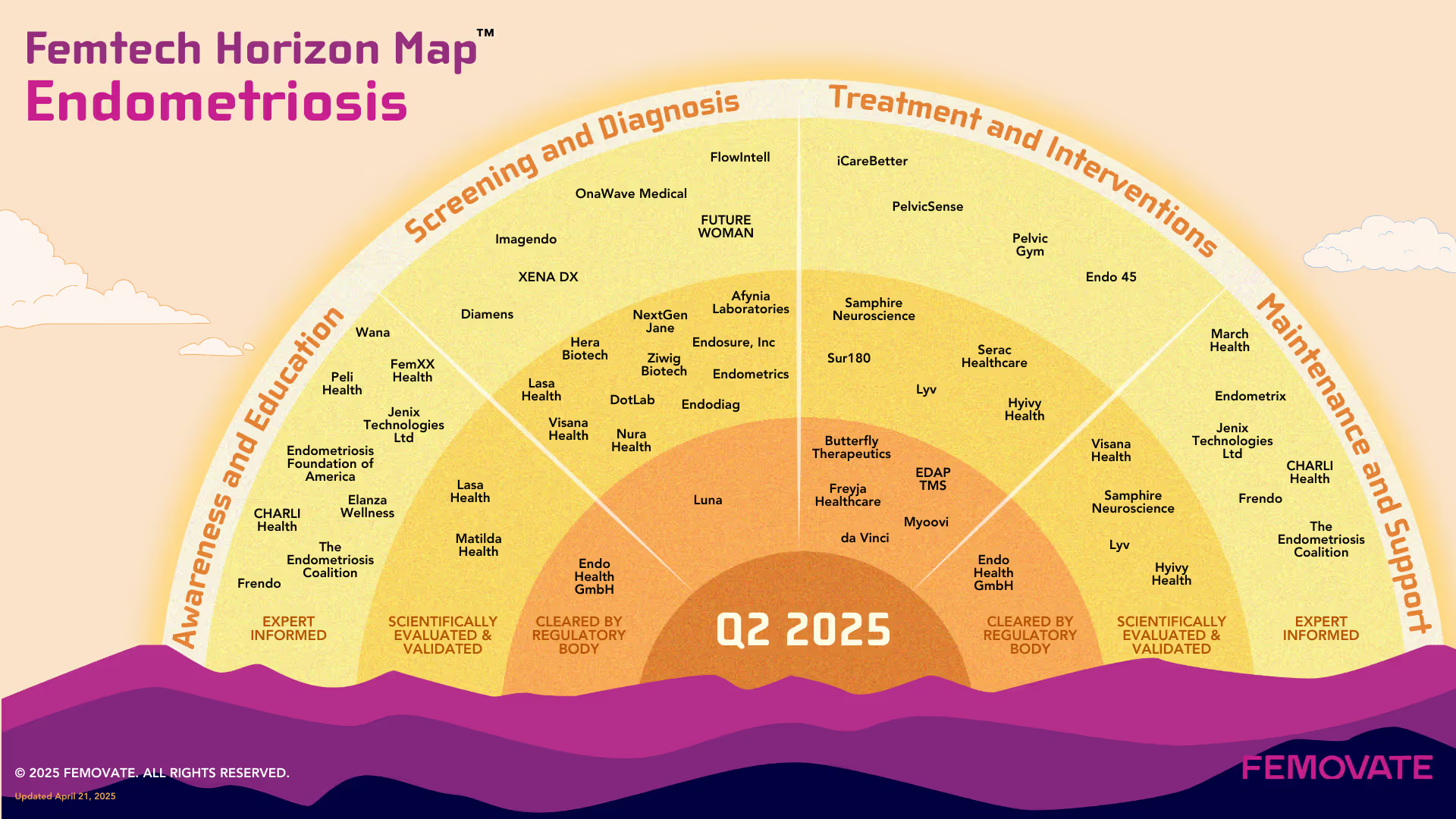
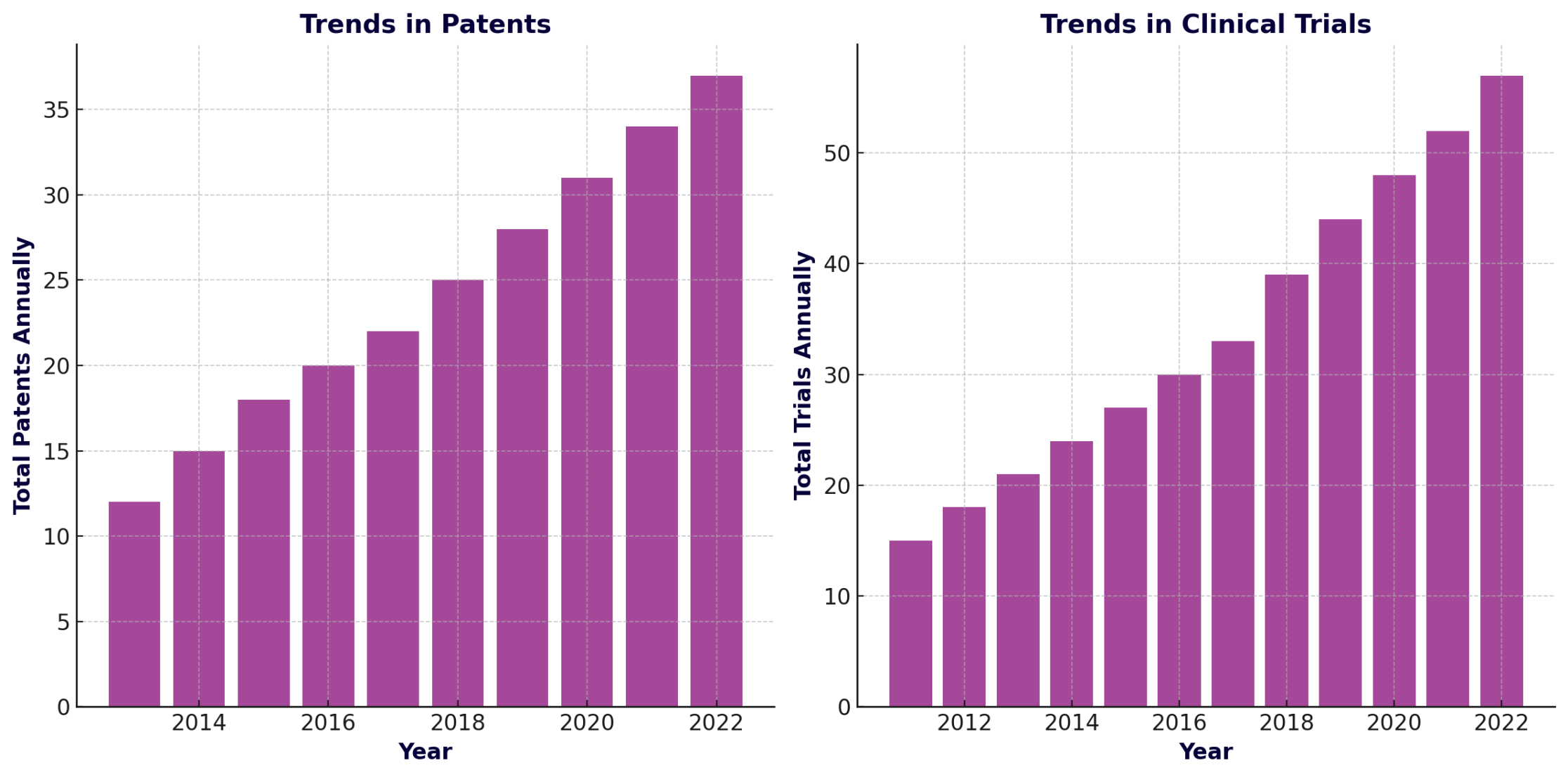
As the Femtech Horizon Map shows, there are many new and emerging technologies coming to market. And an increase in patents filed and clinical trials conducted related to endometriosis over the last decade indicates there may be more in the pipeline. Below is a summary based on the available data:
Clinical trial data for 2023 is incomplete as of June 30, 2023 and patent data for 2023 is not yet available.
Emerging Technologies Across the Continuum of Care
Awareness & Education
Digital Platforms: Groups like the Endometriosis Foundation of America, The Endometriosis Coalition and numerous startups provide education and support with sites and apps that offer symptom tracking, community support and pain relief techniques.
Symptom Tracking: Many apps help individuals monitor symptoms, though the space is becoming crowded with similar offerings, and other complimentary tools for symptom tracking across various conditions.
Screening & Diagnosis
Non-Invasive Biomarkers: Companies like DotLab and Afynia Labs are developing blood-based tests to improve detection, and ARPA-H recently awarded Nura Health the Spark Innovation prize for their precision medicine platform, combined with a blood test to both diagnose and offer personalized treatment recommendations.
AI-Enhanced Imaging: New technology is refining ultrasound and MRI analysis, helping identify endometriosis sooner and predict surgical outcomes.
Treatment & Therapies
Pharmaceutical Advances: Recent advances including FDA cleared AbbVie’s Orilissa and a new daily pill approved by the NHS, have expanded non-surgical interventions.
Regenerative Research: Studies into stem cell therapy and immune-modulating treatments could offer long-term solutions.
Robotic-assisted Surgeries: A new approach offering an alternative to laparoscopic excisional surgery for deep endometriosis
Ongoing Care & Management
Telemedicine & Virtual Care: Platforms like Visana Health integrate telemedicine with medication management and lifestyle support.
Pain Management Innovations: Companies are exploring cannabinoid-based treatments and neuromodulation to address chronic pain.
Investment & Market Opportunities
While digital health has grown, there are still gaps to address:
Non-Invasive Screening and Diagnostics: Faster, more accurate detection methods remain a top priority.
New Therapies Beyond Hormonal Treatment: There’s a strong need for targeted treatments with fewer side effects.
Integrated Care Models: Connecting early screening, diagnostics, treatment, and long-term management into a streamlined system will improve patient experiences.
What’s Next for Endometriosis Innovation?
Looking ahead, we expect:
Non-invasive screening and diagnostics to become the norm.
AI-driven tools for diagnosis and treatment, including imaging-based identification of endometrial tissue and precision-guided surgical interventions.
AI-driven insights for personalized intervention and management.
Breakthrough biotech solutions targeting endometriosis at a molecular level, including recent advances in therapies designed to shrink lesions and disrupt disease progression.
Adoption of these tools by primary care and specialist provider, not just gynecologists.
What’s needed now is more investment in this space and the development of strategic platforms and partnerships that span the full continuum of care. The Femtech Horizon Map for Endometriosis is a starting point for identifying these opportunities and accelerating meaningful progress in women’s health.